Is 1 cup always 250 mL?
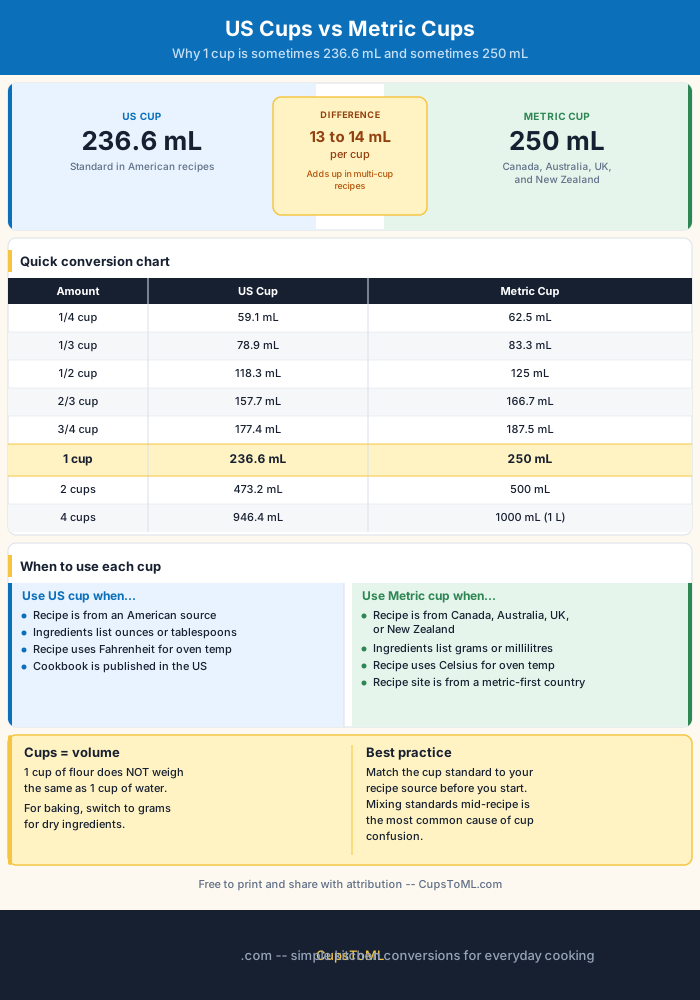
No. That is the Metric cup; US cup is about 236.6 mL.
You open a recipe from a Canadian food blog, measure carefully, and still end up with a sauce or batter that feels slightly off compared with the same dish from an American cookbook. That can happen even when both recipes say "1 cup." The reason is simple but easy to miss: a Metric cup and a US cup are not the same size. Start here when you need the main explanation for that gap, the quickest way to choose the right standard, and the clearest next step when cups stop being the honest tool.
Watch Millie explain why 1 cup is not always 250 mL and how to match the right cup standard to your recipe source.
For general educational purposes only.
Last reviewed: April 18, 2026
CupsToML is independently run for home cooks and bakers. The site aims to be practical and transparent: it uses a clear kitchen default when one is needed, shows where a different standard changes the answer, and points you to a guide or chart when a quick number is not the whole story.
If you need the site-wide standards behind this guide, use Kitchen Measurement Standards and About CupsToML.
A Metric cup is 250 mL. A US cup is about 236.6 mL. That means the difference per cup is about 13.4 mL.
On paper that does not look dramatic. In the kitchen, though, it explains why two recipes that both call for "2 cups" can produce slightly different totals. A Metric recipe is assuming more volume in every cup than a US recipe is. If you use the wrong standard for several ingredients in the same recipe, the differences begin to stack up.
This comes up most often in Canada and other metric-first recipe sources, where the cup is treated as 250 mL, while many American recipes assume the smaller US cup. Neither one is wrong. They are simply different measuring systems that happen to use the same word.
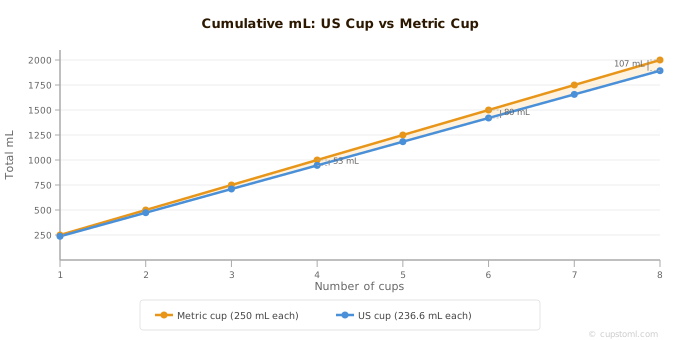
If a recipe uses only one cup of broth in a forgiving soup, the difference may be small enough that you barely notice it. As recipes get larger, the gap becomes more obvious. Two cups means about 26.8 mL difference. Four cups means about 53.6 mL. Eight cups pushes the gap to more than 100 mL.
That matters in three common situations. First, batch scaling, where a small per-cup mismatch compounds across a big pot of soup or sauce. Second, baking, where liquid-to-flour ratios are less forgiving and even modest shifts can change crumb, spread, and texture. Third, repeat cooking, where a recipe seems inconsistent even though you think you are measuring the same way each time.
| Amount | Metric cup total | US cup total |
|---|---|---|
| 1 cup | 250 mL | ~236.6 mL |
| 2 cups | 500 mL | ~473.2 mL |
| 4 cups | 1000 mL | ~946.4 mL |
| 8 cups | 2000 mL | ~1892.7 mL |
That table is why cup standard matters more in large batches than in one quick mug cake or single serving drink.
Imagine you are making a tomato soup recipe that calls for 4 cups of stock. If the recipe is Metric, that means 1000 mL. If you make it with a US cup, you land closer to 946 mL. The soup still works, but the final texture and concentration shift slightly.
Or say you are baking muffins from an international recipe that calls for 2 cups of milk across the batter and glaze. A Metric recipe expects 500 mL. A US reading gives about 473 mL. That is not a massive difference on its own, but once flour, oil, and other ingredients are also being measured under the wrong assumption, the final batter can feel thicker than expected.
| Common recipe amount | Metric total | US total | Where it comes up |
|---|---|---|---|
| 1.5 cups milk | 375 mL | ~355 mL | Smoothies, pancake batter, cream sauces |
| 2 cups broth | 500 mL | ~473 mL | Small soups, rice, braising liquid |
| 4 cups stock | 1 L | ~946 mL | Batch soup or stew |
| 6 cups soup base | 1500 mL | ~1419 mL | Larger family batch |
| 1/2 cup oil | 125 mL | ~118 mL | Cake or muffin batter |
| 1/3 cup sugar | ~83 mL | ~79 mL | Baking or sweet sauces |
This is also why recipe comparisons online can feel confusing. One site may be converting from Metric. Another may be written natively for US readers. The numbers disagree not because one calculator is broken, but because the recipe standards are different.
What that difference feels like depends on the recipe. In a drink, one cup may be close enough. In a batter, a 1/2 cup oil line or a repeated liquid measurement can change texture faster than people expect. In a soup pot, 4 or 6 cups can shift yield and concentration enough to notice even if the math looked close on paper.
A table like this makes the practical pattern easier to see. The mismatch is modest at one or two cups, but it becomes more noticeable as the recipe starts leaning on repeated cup measurements.
Start with the recipe source. If you only need one rule from this guide, make it this one. If the recipe comes from a US cookbook, American blog, or US food brand, assume US cups unless the recipe gives mL directly. If it comes from a Canadian or other metric-first source, there is a good chance the recipe expects a Metric cup.
If the recipe lists mL anywhere, that is your best clue and your easiest path. Measure by mL and skip cup assumptions entirely. If you need help converting while you read, use cups to mL, check the reverse at mL to cups, or browse the Kitchen Volume hub.
If you want the broader trust and assumption notes behind those choices, the page on Kitchen Measurement Standards: How CupsToML Handles Assumptions explains how this site approaches default standards, ingredient-state context, and when to switch to weight.
When scaling, convert once first, then multiply. That keeps repeated rounding and cup-standard confusion from spreading across every ingredient line.
If the recipe is mostly liquid, mL is usually the cleanest path. It is easy to reproduce and avoids the Metric-versus-US question completely. If the recipe is flour-heavy or sensitive, grams are even better because they solve both the cup-standard issue and the packing issue that comes with dry ingredients.
For baking especially, weight gives you fewer surprises. If you want the fuller explanation behind that, the guide on why weight beats volume walks through the flour-and-sugar side of the problem with real examples. If you already understand the main rule here and want worked kitchen examples next, continue to US vs Metric Cup: Practical Recipe Examples.
No. That is the Metric cup; US cup is about 236.6 mL.
Sometimes not much, but it matters more as cup totals increase and recipes become less forgiving.
Yes, when mL is provided it is usually the most consistent path.
Convert to mL and measure by mL first.
Some recipe sources write for mixed audiences, so check whether they provide mL or explain their standard.
Use cups to mL and mL to cups.