If a conversion looks “off,” check whether you mixed weight (oz) and volume (fl oz).
Kitchen Volume Conversions
How to use this hub
Use this hub when recipes jump between cups, mL, tablespoons, teaspoons, fluid ounces, and liters. The goal is not just to find a number. It is to pick a clean measuring path so the whole recipe stays consistent from prep to serving.
If you have ever switched between a US recipe and a metric one in the same week, you already know why this matters. A little mismatch in cups, a little rounding at each step, and a recipe can drift more than it should.
If you want the short version of the site-wide assumptions first, start with Kitchen Measurement Standards: How CupsToML Handles Assumptions. Then use Metric vs US Cup: Why Results Differ when the real problem is matching your recipe source to the right cup standard.
| If the recipe gives | Best move | Why it helps |
|---|---|---|
| mL or liters | Measure by metric directly | Avoids cup-standard confusion completely |
| Cups from a US source | Stay with US cups or convert once | Keeps totals aligned with the original recipe |
| Cups from a metric-first source | Use Metric cup values | Prevents small but repeated volume drift |
| Large batch scaling | Convert once to mL, then multiply | Reduces repeated rounding errors |
Best first clicks
Cups to mL
Best starting point when a cup-based recipe needs a metric total quickly.
mL to Cups
Useful when a metric recipe needs to fit a cup-based measuring set.
Metric vs US Cup
Read this first if the recipe source and your measuring cups do not match.
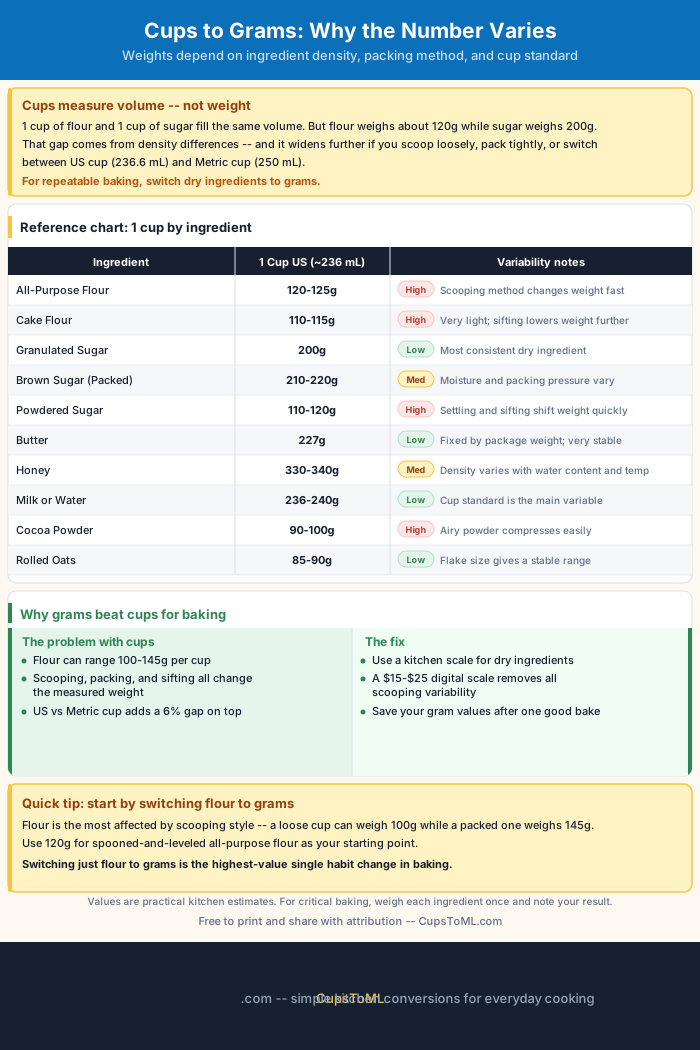
Ingredient Cups to Grams Chart + Calculator
Use this when the ingredient itself is the issue and weight is more reliable than cup volume.
Common mistakes (and quick fixes)
oz vs fl oz
Use this when a recipe says ounces and you need to know if it means weight or volume.
Dry vs liquid measuring cups
Use this when the measuring tool itself might be the source of the mismatch.
Metric vs US cup
Use this when totals keep shifting between recipe sources even though the numbers look similar.
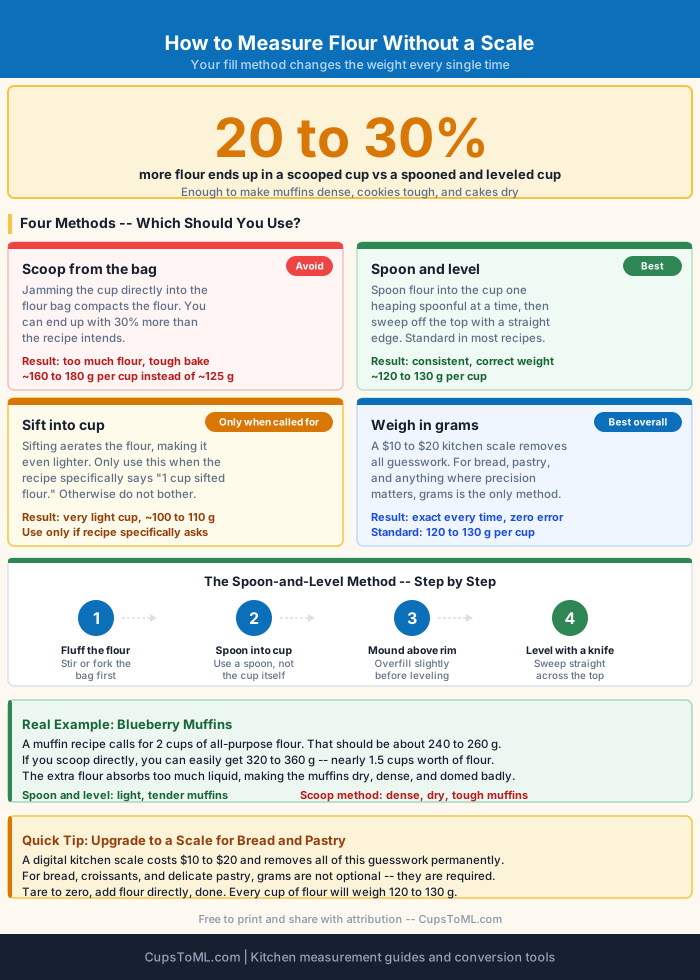
How to Measure Flour Without a Scale
Use this when cup technique, not the math itself, is probably changing the result.
Fraction and small-batch cup checks
For fractional cup amounts and small fixed totals, use How Many mL Are in a Cup? with the quick amount presets instead of browsing a long list of near-duplicate fixed-value pages.
Popular chart
Quick ingredient reference from the Ingredient Cups to Grams Chart + Calculator.
| Ingredient | 1 Cup (US) in Grams | 1 Tablespoon in Grams |
|---|---|---|
| Flour | 120g–125g | 8g–9g |
| Granulated Sugar | 200g | 12.5g |
| Butter | 227g | 14.2g |
| Milk/Water | 240g | 15g |
| Honey/Syrup | 340g | 21g |
Downloadable volume-side references
These SVG references are the best companions when a plain cups-to-mL answer is not enough and you want a fast visual check for cup standards or flour-sensitive measuring.
| Reference page | Best for | Download |
|---|---|---|
| Ingredient Cups to Grams Chart + Calculator | Best for flour, sugar, butter, cocoa, oats, and other ingredient-specific cup-to-gram checks. | Download SVG chart |
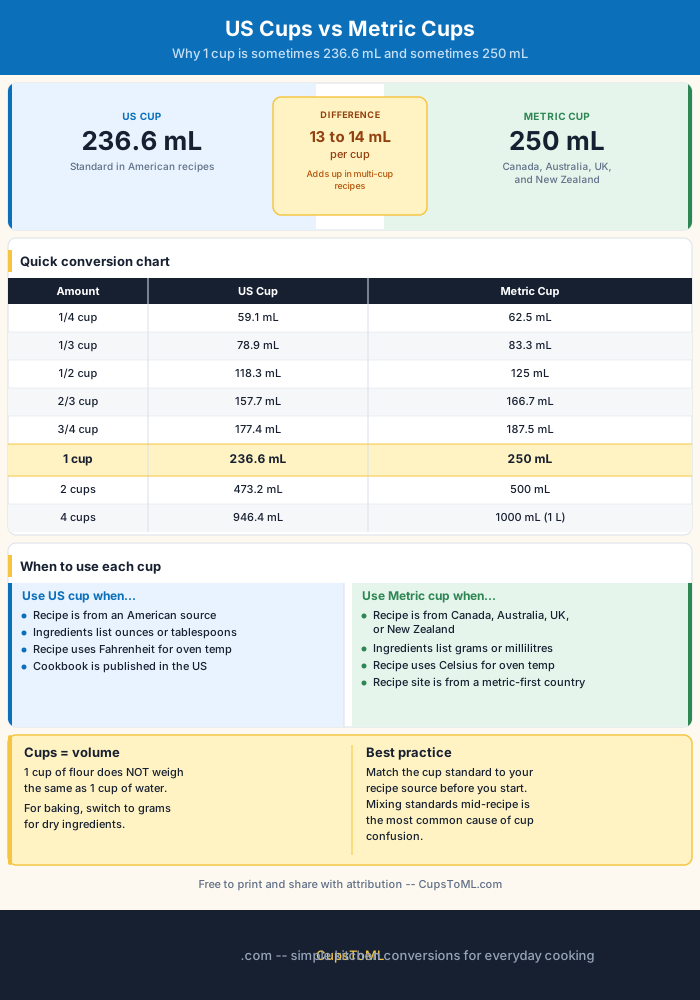
| Metric vs US Cup: Why Results Differ | Best for side-by-side cup-standard comparisons when recipe sources disagree. | Download SVG chart |
| How to Measure Flour Without a Scale | Best for spoon-and-level technique, flour compaction, and practical baking consistency. | Download SVG chart |
Volume workflow notes
Use this kitchen volume hub when recipes move between cups, mL, tablespoons (tbsp), teaspoons (tsp), fluid ounces (fl oz), and liters. It is built for practical cooking decisions: checking one ingredient quickly, converting full batch totals, or lining up measurements across different recipe sources.
Example: 2 metric cups = 500 mL, but 2 US cups ≈ 473 mL. That is enough to change dough hydration in baking or concentration in soup and sauce bases.
Useful conversion shortcuts
- How Many mL Are in a Cup?
- mL to Cups Converter
- How Many Liters Are in a Cup?
- Liters to Cups Converter
- How Many Tablespoons Are in a Cup?
- Tablespoons to Cups Converter
- How Many Ounces Are in a Cup?
- How Many mL Are in a Fluid Ounce?
Metric cup (250 mL) is commonly used in Canada, the UK, Australia, and New Zealand, and many metric-based recipes worldwide. US cup is 236.588 mL. For scaling, convert once to mL, multiply the scaled amount, then convert back only at the end if you still need cups, tbsp, tsp, fl oz, or liters.
For the practical rules behind those choices, keep Kitchen Measurement Standards: How CupsToML Handles Assumptions handy. For baking-sensitive volume questions, pair this hub with Why Weight Beats Volume and the Ingredient Cups to Grams Chart + Calculator.
Tips
Doubling a recipe? Convert first, then multiply; it reduces rounding errors.
For cleaner measuring, round to the nearest practical tool: 1/4 tsp, 1/2 tsp, 1 tsp, 1 tbsp, etc.
Volume Converter Pages
Liter Conversions
How Many Liters Are in a Cup?
Fast liter and cup conversion for bigger totals and metric-first recipes.
Liters to Cups Converter
Fast liter and cup conversion for bigger totals and metric-first recipes.
mL to Liters Converter
Fast liter and cup conversion for bigger totals and metric-first recipes.
How Many mL Are in a Liter?
Fast liter and cup conversion for bigger totals and metric-first recipes.
Cups to Fluid Ounces Converter
Open this converter when you need a quick kitchen volume answer without redoing the math.
How Many Liters Are in a Cup?
Open this converter when you need a quick kitchen volume answer without redoing the math.
How Many mL Are in a Cup?
Open this converter when you need a quick kitchen volume answer without redoing the math.
How Many Ounces Are in a Cup?
Open this converter when you need a quick kitchen volume answer without redoing the math.
How Many Tablespoons Are in a Cup?
Open this converter when you need a quick kitchen volume answer without redoing the math.
How Many Teaspoons Are in a Cup?
Open this converter when you need a quick kitchen volume answer without redoing the math.
How Many mL Are in a Fluid Ounce?
Open this converter when you need a quick kitchen volume answer without redoing the math.
Fluid Ounces to Cups Converter
Open this converter when you need a quick kitchen volume answer without redoing the math.
Liters to Cups Converter
Open this converter when you need a quick kitchen volume answer without redoing the math.
How Many mL Are in a Liter?
Open this converter when you need a quick kitchen volume answer without redoing the math.
mL to Cups Converter
Open this converter when you need a quick kitchen volume answer without redoing the math.
mL to Fluid Ounces Converter
Open this converter when you need a quick kitchen volume answer without redoing the math.
mL to Liters Converter
Open this converter when you need a quick kitchen volume answer without redoing the math.
mL to Tablespoons Converter
Open this converter when you need a quick kitchen volume answer without redoing the math.
mL to Teaspoons Converter
Open this converter when you need a quick kitchen volume answer without redoing the math.
Tablespoons to Cups Converter
Open this converter when you need a quick kitchen volume answer without redoing the math.
How Many mL Are in a Tablespoon?
Open this converter when you need a quick kitchen volume answer without redoing the math.
How Many Teaspoons Are in a Tablespoon?
Open this converter when you need a quick kitchen volume answer without redoing the math.
Teaspoons to Cups Converter
Open this converter when you need a quick kitchen volume answer without redoing the math.
How Many mL Are in a Teaspoon?
Open this converter when you need a quick kitchen volume answer without redoing the math.
Teaspoons to Tablespoons Converter
Open this converter when you need a quick kitchen volume answer without redoing the math.
FAQs
When should I use cups vs mL?
Use mL when possible for consistent measuring across recipe sources. Cups are still practical, but mL reduces ambiguity when scaling.
Why do cup-based results change?
Because cup size depends on the selected standard. A metric cup is 250 mL, while a US cup is 236.588 mL.
What’s the difference between Metric and US cups?
Metric cup is 250 mL. US cup is 236.588 mL, so repeated cup amounts can produce different totals.
Is fl oz the same as oz?
No. fl oz is volume, while oz is weight. Use fl oz for liquids and oz for mass.
How do I scale a recipe without rounding errors?
Convert once to a base metric value like mL, multiply the full amount, then convert back only if needed.
How many tablespoons are in a cup?
In common kitchen practice, 1 cup is 16 tablespoons.
How many teaspoons are in a tablespoon?
1 tablespoon equals 3 teaspoons.