Can I scoop flour directly from the bag?
You can, but it usually packs extra flour into the cup and makes baking less consistent.
You want to bake, the recipe gives cups, and the scale is either missing, out of batteries, or not part of your kitchen at all. That does not mean the recipe is doomed, but it does mean flour needs more care than most people realize. A cup of flour can change a lot depending on how you fill it, and those small differences are exactly what make one batch light and another batch dense. This guide shows how to measure flour more consistently when a scale is not an option, including the practical spooned-vs-scooped difference that catches many home bakers. If you want the broader rules behind cup standards and ingredient assumptions first, read Kitchen Measurement Standards: How CupsToML Handles Assumptions.
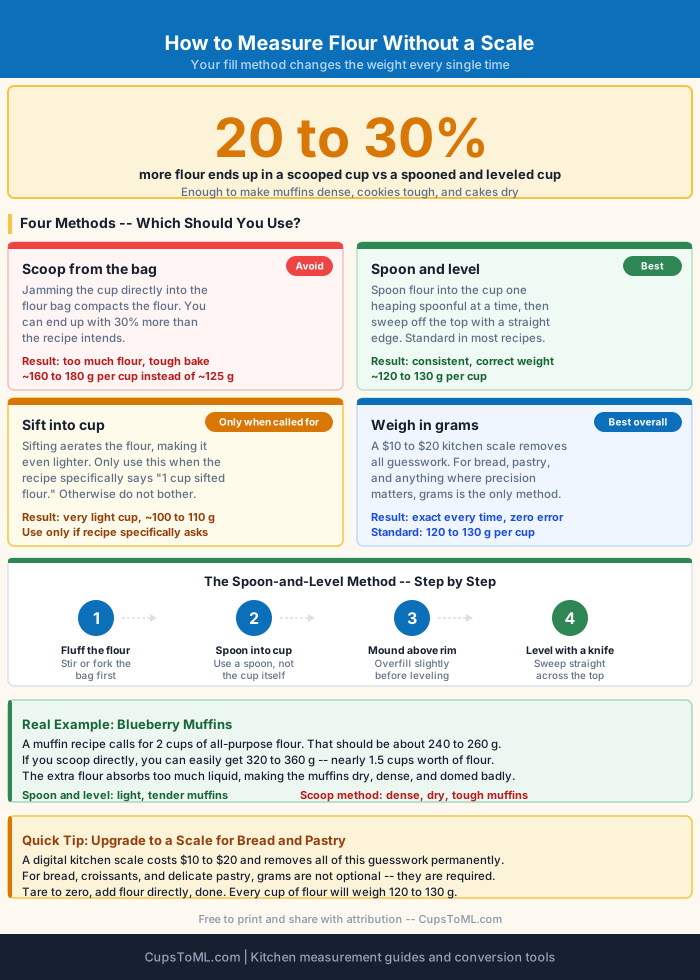
Flour is light, airy, and easy to compress. If you scoop directly from the bag, you pack extra flour into the cup. If you spoon it in gently, the flour stays looser and lighter. Both can look like a full cup, but they do not weigh the same.
That difference matters because flour affects structure. A little too much flour can make cookies thicker, muffins denser, and cakes drier. A little too little can make batter loose and baked goods more fragile. This is why flour gets so much attention compared with ingredients like milk or oil.
A scale is still the most reliable option, but if the recipe only gives cups or the scale is not available, technique becomes your best tool. This is also why one site may list one cup of flour at one number while another gives a slightly different answer. The cup may have been measured differently, or the source may be using a different cup standard.
The best everyday method is spoon-and-level. Stir the flour lightly first if it has been sitting packed in the bag. Spoon it into a dry measuring cup until it mounds slightly over the rim, then sweep the top level with a straight edge.
| Method | What happens | Best use |
|---|---|---|
| Scoop straight from bag | Packs extra flour into the cup | Avoid for baking |
| Spoon and level | Gives a lighter, more repeatable cup | Best general method |
| Sift into cup | Creates a very light cup if recipe does not ask for sifted flour | Use only when recipe says so |
| Weigh in grams | Most consistent result | Best overall if possible |
This method will not make cups as precise as grams, but it closes the gap enough that home baking becomes much more consistent.
Far enough to change a bake. A spooned-and-leveled cup of all-purpose flour is often around 120 to 125 grams. A heavily scooped cup can climb well above that. Across two or three cups in a cake or muffin batter, that difference is no longer tiny.
| Method | Likely result | Why it changes the bake |
|---|---|---|
| Scooped from the bag | Heavier cup | Can make batter thicker and final texture denser |
| Spooned and leveled | Lighter, more repeatable cup | Closer to what many baking recipes assume |
| Sifted into the cup | Lightest cup | Can under-measure flour if the recipe did not ask for sifted flour |
If you want the broader reason these small cup changes matter so much, Why Weight Beats Volume (Cups vs Grams) explains the bigger repeatability problem in plain kitchen terms.
If you want a faster flour-to-grams reference while you work, use the Ingredient Cups to Grams Chart + Calculator. That page acts as the main parent reference for this topic, while this guide stays the broader practical flour-measuring page so the spooned-vs-scooped question does not need a separate standalone article yet.
Imagine a muffin recipe that calls for 2 cups flour. If you scoop directly from the bag, each cup may hold noticeably more flour than the recipe developer intended. That means the batter gets thicker before you even add the milk. The muffins may still bake, but they will likely come out denser and less tender.
Now make the same recipe using spoon-and-level. The flour stays lighter, the batter behaves more like the recipe expected, and the final texture is closer to what the instructions promised. Nothing else changed. Just the fill method.
That is the quiet power of flour technique. You do not need perfect equipment to improve results. You just need one repeatable method and the discipline to use it every time.
For casual pancakes or a forgiving quick bread, spoon-and-level is often good enough. For bread dough, layer cakes, pastry, or any recipe you are trying to repeat exactly, switching to grams makes the whole process calmer.
If you bake the same recipe often, it also helps to note which method you used and how the result turned out. That gives you a house version of the recipe, which is often more useful than chasing perfect theory.
If the recipe source itself looks unclear, confirm the cup standard too. Metric vs US Cup: Why Results Differ helps when a recipe may be metric-first but your tools are US-based.
For casual muffins, pancakes, cookies, and quick breads, spoon-and-level is usually good enough to get much more consistent results than random scooping. It is not perfect, but it is a meaningful improvement over the most common bad habit.
A scale becomes more important when the recipe is bread, pastry, cake layers, or something you care about repeating exactly. In those cases, a few tablespoons of extra flour can be the difference between a dough that feels right and one that fights you from the start.
So the practical answer is simple: use spoon-and-level when a scale is not available, and switch to grams when precision matters or when you are trying to fix an inconsistent bake. The guide on Why Weight Beats Volume (Cups vs Grams) explains the bigger logic, and the Ingredient Cups to Grams Chart + Calculator gives the fast ingredient reference.
You can, but it usually packs extra flour into the cup and makes baking less consistent.
Yes. It is the simplest way to get closer to the cup the recipe likely assumed.
Only if the recipe specifically says sifted flour.
Flour compresses easily, while liquids self-level and stay more consistent.
A basic kitchen scale, because grams remove the guesswork completely.
No. Scoop style, sifting, settling, and cup standard can all shift the real weight.